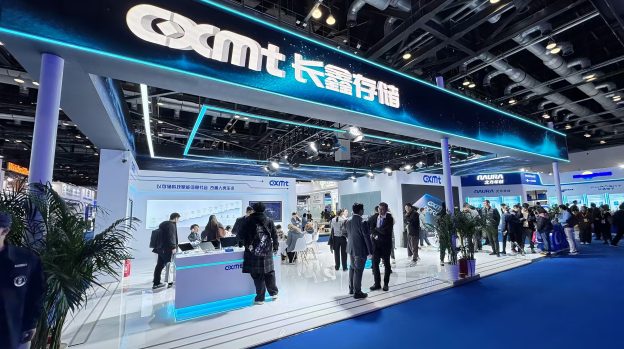
The data-center buildout is diverting wafer capacity to HBM — a reported THREE-YEAR HBM deficit — spiking DRAM/NAND prices and forcing consumer-hardware price hikes (Apple, Microsoft). Now also the capacity-race ledger (backlog W5: widened here, not a new thread): Samsung/SK Hynix/Micron expansion responses, CXMT's state-funded push (charging ABOVE Samsung; new modules with no price relief; DoD ban overhang), and who blinks first on capex.
Summary
SK Hynix posted a record Q2 print that still missed expectations as Korea's chip sector suffered a historic single-day crash.
Whether the reported three-year HBM deficit starts easing as Samsung, SK Hynix, and Micron ramp capacity, or CXMT's state-backed push widens it further, remains open.
CXMT posted an 87.59% gross margin for Q2 2026, up 8.44 percentage points from Q1’s roughly 79%, and higher than Micron’s 84.9% non-GAAP gross margin (fiscal Q3) and SK Hynix’s 83.2% (Q2 2026). TrendForce, reporting this 08-31, frames it as the clearest evidence yet that China’s state-backed DRAM entrant is now pricing and earning at the same level as the two incumbents this thread has tracked from the buy side all year — a direct extension of Saturday’s already-recorded H1 revenue/profit beat, not a restatement of it. (TrendForce)
The same reporting says CXMT has begun mass production of LPDDR6, and multiple outlets (TechNode, Digitimes, Reuters-sourced coverage) confirm this is the first commercial LPDDR6 deployment anywhere, ahead of Samsung and SK Hynix — the chips will ship in Xiaomi’s 18 Fold foldable, launching September 2026, confirmed by Xiaomi founder Lei Jun on Weibo. This is a technology-leadership claim, not just a capacity or pricing one: CXMT was mass-producing LPDDR5 less than a year ago. (TechNode, Digitimes)
Korean trade press reports spot-market HBM3E (36GB) trading around $2,100 against long-term-agreement pricing equivalent to roughly $350-490 — a 4-5x premium — with HBM4 (16-layer) spot pricing around $3,500 against LTA rates. The piece attributes the gap to HBM4’s lower manufacturing yield consuming more DRAM wafer capacity per unit, and to Samsung’s already-recorded 70%-of-capacity long-term-agreement lock (a July commitment, not new) starving the spot market; it adds that even large customers like Nvidia, Microsoft and Google reportedly cannot get their full contracted volumes. ⚠️ Figures are reported in Korean won and converted; treat as directional rather than exact. (Seoul Economic Daily)